

Is Cuba’s Economy Opening? What the 176 Measures Mean for Investors
Cuba approves new economic measures as it seeks to attract foreign capital and ease tensions with the U.S. government


What Is the Status of the Reform Measures?
Prime Minister Manuel Marrero Cruz presented a package of 176 measures to Cuba’s National Assembly (ANPP), which the representatives approved during its Third Extraordinary Session.[1] Raúl Castro participated via teleconference and President Díaz-Canel was present in the hall. The session was of the “extraordinary” type, held outside Cuba’s two ordinary annual legislative sessions, indicating the urgency of the matter.[2]
Investors relying on this package as an active legal framework are reading a proposal, not a statute. The measures are guidelines that require extensive complementary norms and specific regulations before they take effect. The 176-measure document was published in Granma—the official outlet of the Cuban Communist Party (PCC)—not as a standalone legal instrument. No related Gaceta Oficial (Cuba’s official registry) has been published to date. The document is structured around a series of tracks clustering the intended reforms into thematic groups.
The reforms were pre-announced by Díaz-Canel on June 12 and backed by the Party’s Central Committee before the ANPP session. [3][4][5]
The Most Significant Proposals for Investors
a. Corporate structure and private enterprise (Tracks 1 and 2)
The most consequential proposal is the conversion of state-owned enterprises (SOE) into joint-stock companies (sociedades mercantiles por acciones), with the government defining its shareholding position by sector and guaranteeing majority presence only in strategic ones.[6] Non-strategic sectors could therefore have minority state participation or none at all. Similarly, private companies would be permitted to organize as limited companies (sociedades anónimas por acciones), and a person could own stakes in multiple private businesses as well as hold equity in state-owned businesses.[7]
These tracks also introduce a National Program for Asset Valuation and Title (Programa Nacional de Valoración y Titulación de Activos Empresariales Estatales), which would inventory all tangible and intangible state enterprise assets, issue enforceable ownership certificates usable as collateral for bank credit, and allow state enterprises to monetize underutilized assets through long-term leases to domestic and foreign actors.[8] Procedures for bankruptcy, liquidation, and restructuring of loss-generating state assets are also included, marking a first in Cuban economic governance.[9]
b. Private banking (Track 11)
Cuba would authorize private banking for the first time since 1959.[10][11][12][13] The proposals allow private capital participation in the banking system under supervision of the Banco Central de Cuba (BCC), including corporate and universal banking licenses, private non-bank financial institutions for microcredit, a digital foreign exchange market with authorized agents, private currency exchange houses, and a virtual asset regulatory framework.[14]
On the monetary side, successive currency devaluations are explicitly proposed with an acknowledgment that enterprises unable to survive devaluation will be liquidated. Cuba’s Transfermóvil mobile payments platform would receive a non-bank financial institution license. Limits on bank transfers and cash withdrawals by natural and legal persons, both national and foreign, would be eliminated.[15]
c. Foreign investment (Track 14)
Surface rights would extend to 99 years and the right of usufruct beyond 50 years for foreign investors.[16] Foreign-invested businesses would be permitted to open bank accounts outside of Cuba without prior authorization, though a notification to BCC and ONAT (Cuba’s tax agency) would be required, thus removing the current requirement of BCC prior authorization under Law 118.[17][18] The legal mandate to use government-appointed staff recruitment entities (entidades empleadoras)—a decades-long burden under Law 118/2014—would be eliminated.[19][20][21] Foreign investors would be permitted to buy and sell real estate for residential units and transact in foreign currency, and “positive administrative silence” for all permitting processes in economic, financial, and commercial activities are also proposed.[22]
d. Land and agriculture (Track 7)
The reforms would allow an indefinite usufruct right to land for all economic actors—natural persons and state, private, or mixed corporations—without the previous requirement of direct and stable work on the land and without area limits.[23] This is a significant departure from the position maintained since the Agrarian Reform laws of the 1960s, where the government granted land only to small-scale producers with personal settlement intent, capped by acreage limits.[24][25] In the new package, cooperatives would gain rights to directly manage foreign financing, open foreign bank accounts, directly export their products, and import inputs, which are activities currently routed through state intermediaries.[26]

e. Labor reform (Track 10)
Employers would be authorized to directly determine which workers are terminated for “economic, technological, or structural reasons” without prior administrative approval, subject to union consultation and payment of a one-time severance of three to six months’ base salary.[27] Remote work from abroad is permitted, and the administrative prohibition on pluriempleo (holding more than one job) for doctors, professors, researchers, and technical professionals would be eliminated.[28]
For foreign investors, the removal of the staff recruiter requirement combined with greater employer flexibility on termination represents the most substantive change to the labor dimension of foreign investment in Cuba in decades.
f. Tax reform (Track 12)
A gradual introduction of a Value Added Tax (VAT) is proposed, starting with select production-consumption chains and potentially reduced rates for basic goods and services.[29] The proposals also include mandatory electronic fiscal invoicing with adoption incentives, accelerated depreciation regimes for food-production and industrial-processing machinery, and a reduction of the corporate income tax burden.[30]
A reduced income tax rate is proposed specifically for the agricultural sector.[31] A business that declares losses for more than two consecutive fiscal periods would face a gross revenue tax as an alternative minimum, preventing the use of declared losses to avoid taxation.[32]
g. Subsidies (Track 9)
Universal subsidies for products like fuel, electricity, cargo and passenger transport, and water tariffs would be eliminated and replaced with targeted individual subsidies.[33] This reform would affect the pricing of virtually every input used in production and commerce in Cuba and represents the most consequential measure in the package for business operating costs.
h. Tourism (Track 17)
All modalities of tourism-related business would be opened to foreign investors, Cuban residents abroad, and Cubans residing in the country, including leases, onerous usufruct rights, and concessions with assets.[34] However, real estate sales would be considered on a case-by-case basis.[35] Restrictions limiting auto rental to specific state enterprises would be eliminated. Travel agencies would now be constituted as 100% foreign companies.[36] Private tourism guides and sales agents would be authorized.[37] International franchises are invited to establish operations in the country.[38] The reforms also propose real estate development in tourist zones of Havana and other urban areas for tourism purposes.[39]

The Constitutional Problem
Several proposals directly contradict Cuba’s 2019 Constitution. However, the ANPP debate glossed over this tension. For example, one congressional representative incorrectly stated that “the Constitution supports the measures.”[40][41] In fact, the legality of the reforms under the Cuban Constitution is uncertain.
Article 18 establishes that Cuba has a “socialist economic system” based on “the [Cuban] people’s ownership over the fundamental means of production as the principal form of property, and on the [centrally] planned management of the national economy, which [monitors], regulates and controls the market.”[42] The joint-stock conversion proposal challenges this provision’s core premise. The Constitution does not distinguish between strategic and non-strategic sectors for the purposes of property. Rather, it establishes the primacy of socialist state ownership as a foundational principle.
Article 22(a) defines one of the recognized forms of property as “socialist state property of all the [Cuban] people, in which the State acts as representative and for the benefit of the people as owner.”[43] Article 22 recognizes multiple forms of property, including private property, but within a system where the state retains dominant ownership over the fundamental means of production under the mandate established by Article 18.[44] Converting state enterprises to joint-stock companies with private or foreign majority stakes—even in non-strategic sectors—requires either a constitutional amendment or legislative workarounds whose validity is uncertain.
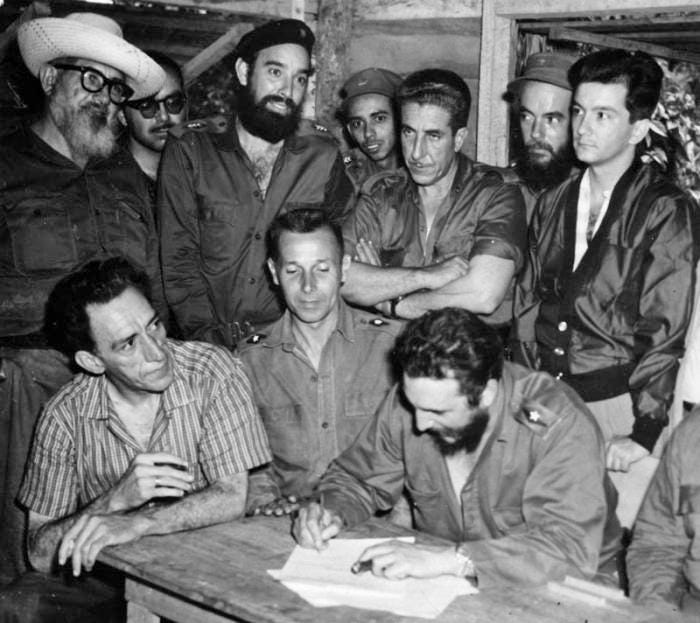
Article 23 is the key provision for land. It states that lands constituting socialist state property “cannot be transmitted as property to natural or legal persons and are governed by the principles of inalienability, imprescriptibility, and non-seizability.”[45] Critically, however, Article 23’s third paragraph allows transmission of rights that do not imply property transfer, subject to prior approval of the Council of State and provided the use serves the country’s economic and social development.[46] Thus, indefinite usufruct without area limits and the Council of State’s approval rests on hollow constitutional ground. In other words, Art. 23 allows usufruct rights on state land in principle, but the reform’s proposed indefinite duration, unlimited area, and open access for foreign investors stretches beyond the conditions established by Art. 23.
Article 18’s definition of a “socialist economic system” does not, by itself, prohibit private banking.[47] However, when read together with constitutional provisions prioritizing state ownership over the fundamental means of production and the central role of state planning, the authorization of private banks with broad corporate and universal licenses would raise significant tensions with the Constitution’s emphasis on state control over strategic sectors. Authorizing private banking with corporate and universal licenses was not contemplated by the drafters of the 2019 Constitution and has no precedent since 1960.[48][49][50]
The government’s own acknowledgment that implementation requires several new laws means the legislative timeline for the most ambitious changes would be measured in years, not weeks or months.[51] Laws in Cuba are ANPP-level instruments that cannot be issued by executive decree between sessions. With only two ordinary ANPP sessions per year, the most transformative elements of this package will not have legal force before 2027 at the earliest, if the normal legislative process is followed.
What is Cuba’s Current Foreign Investment Regime?
Law No. 118/2014 remains the legal framework of foreign investment in Cuba.[52] Its provision on mandatory use of state-appointed staff recruitment entities remains in place.[53] The approval of foreign investment proposals continues to flow through the Council of State, Council of Ministers, and delegated agency heads according to sector and modality.[54] The current requirement for BCC prior authorization to open foreign bank accounts similarly remains in force.[55] None of these provisions have been amended. Introducing “positive administrative silence” in the permitting and licensing processes for foreign investment requires formal overhauling of substantial bodies of complementary regulations that have yet to be drafted. Thus, the reform package remains a highly aspirational political stance, not firm legal ground.
Impact of the New Measures on U.S.-Cuba Relations
The approval of the 176 measures should be read as the usual unanimous endorsement by a legislature that has never voted against a Politburo proposal. The Party, on the other hand, seems to have concluded that a crisis-induced reform is preferable to the total collapse of its own governing structure. Hence, the ANPP’s vote is a political instruction to begin drafting legislation, not an enforceable legal framework.
The U.S. government has not changed its position after the announcement of the reforms. The day after the ANPP session, a State Department spokesperson called the reforms “modest, long overdue” and ultimately “superficial smoke signals” from the Cuban government.[56] The U.S. official went on to assert that Havana’s move was part of their “handbook,” and that announcing a “cycle of supposed reforms to insinuate a desire for change” would be followed by a quick “rollback” if government control was “threatened.”[57]
On June 23, five days after the ANPP session, the U.S. State Department designated five additional Cuban entities pursuant to Executive Order (E.O.) 14404: three commercial and financial institutions (AUSA, RAFIN S.A., and BFI), plus GeoMinera S.A. and Empresa Siderúrgica José Martí in mining & metals.[58][59] None of these entities are peripheral actors in the Cuban economy. BFI (Banco Financiero Internacional) handles the vast majority of transactions involving foreign entities operating in and outside of Cuba. RAFIN is Cuba’s offshore financial node and investment vehicle. AUSA controls container traffic at the Mariel Special Development Zone (Cuba’s main container terminal) and runs logistics and warehousing across the island. GeoMinera S.A. is the SOE controlling exploration, extraction, and commercialization of all non-nickel minerals in Cuba. Empresa Siderúrgica José Martí (or Antillana de Acero) is Cuba’s SOE controlling steel production.
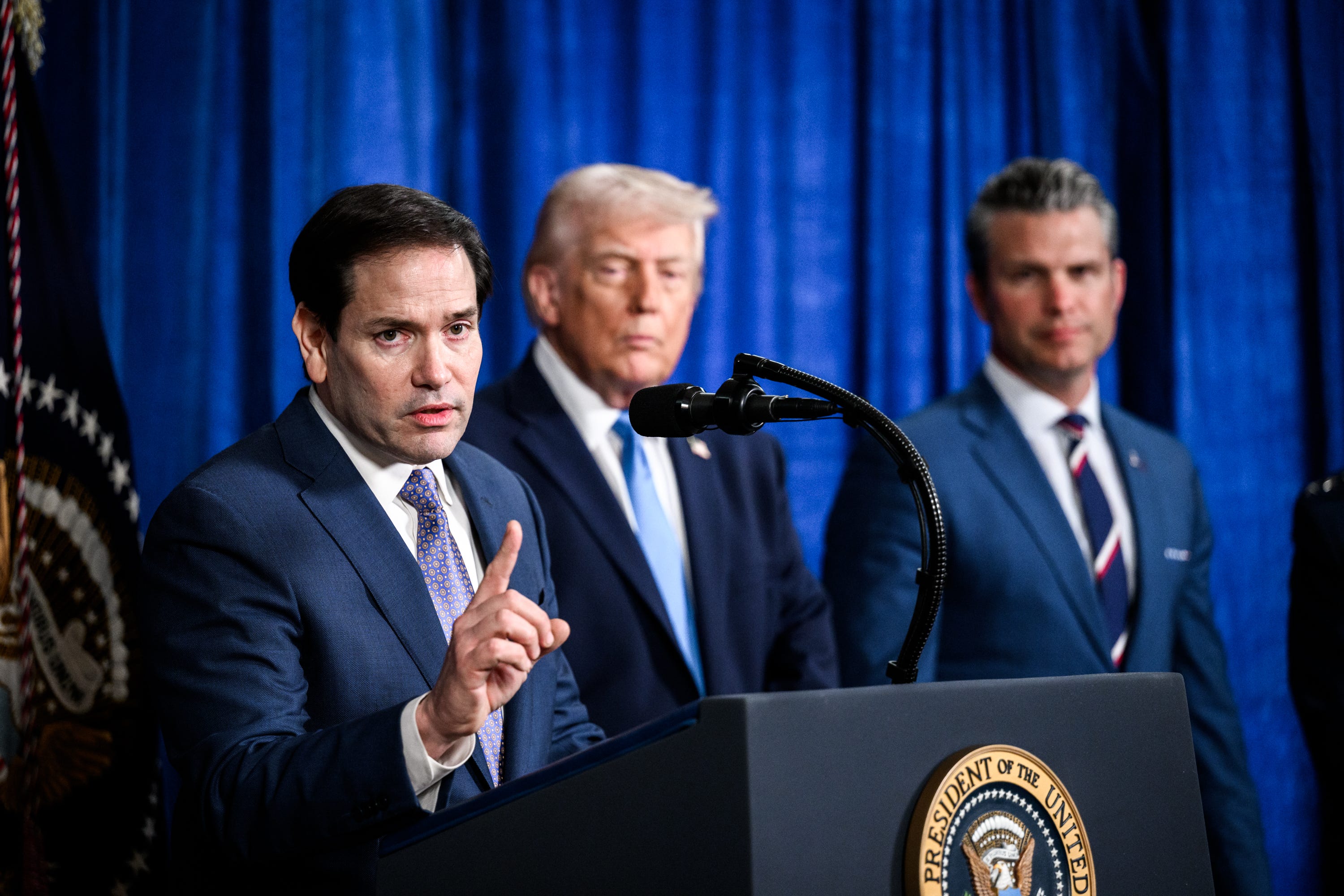
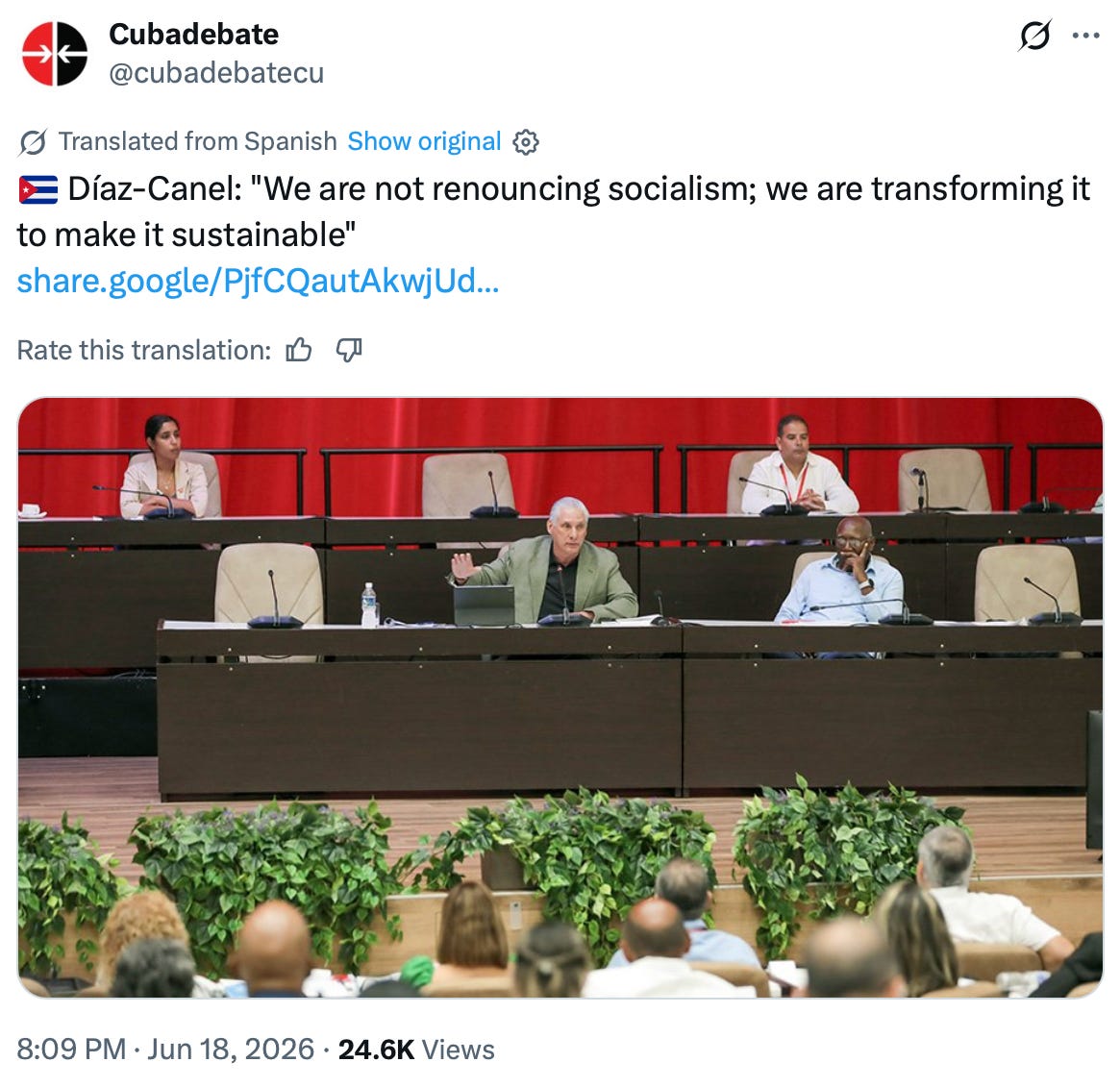
These developments indicate a clear schism in the diplomatic dispute: Havana wants time and to be in control of the privatization schedule through its intended reforms, but Washington has lost its patience. The U.S. may be applying to these newly-sanctioned entities the same playbook behind the takeover of Sherritt’s nickel-cobalt operation in Cuba, where sanctions cleared the way for a U.S.-aligned buyer to acquire control of the asset. Secretary Marco Rubio himself announced the June 23 measures against the “Communist” government in Havana, further implying that the U.S. posture demands much more from Cuba than the reform announcements.[60] Cuba’s position that it is “not abandoning socialism” leaves no room for the two sides to converge.[61]
Overall, it is unlikely that the reforms will solve the differences between the U.S. and Cuba. This is so not only because of the disparity of priorities, but also due to Cuba’s track record on announced reforms that fail to materialize.[62][63] The 2011 Sixth Party Congress Lineamientos (guidelines) also contained ambitious reforms that produced only partial, selective implementation over a decade before they were mostly scrapped.[64][65] There is no indication that this time will be different, unless further actions are taken beyond political announcements.
Final Compliance Considerations for U.S.- and non-U.S. Investors
For U.S. investors, the Cuban Assets Control Regulations (the Embargo) and the Helms-Burton Act all remain fully in force.[66][67] Cuba’s domestic opening does not modify OFAC’s jurisdictional reach. Furthermore, Washington’s May 1, 2026 E.O. expanding Cuba sanctions directly contradicts Cuba’s intended reforms, and the June 23, 2026 designations of the five Cuban entities only deepens that tension.[68][69]
For non-U.S. investors, the State Department warned that foreign banks and businesses servicing sanctioned entities or operating in Cuba’s energy, defense, metals, mining, or financial sectors risk being cut off from the U.S. financial system.[70] Any institution with correspondent banking relationships now faces a different risk profile than before June 23.
Overall, the new investment opportunity is the clearest since the 1990s, in terms of what Cuba is willing to offer on paper. Whether that means anything without a corresponding shift in U.S. sanctions is a different question. Moving forward, tracking the Gaceta Oficial for Cuba’s enacted laws as well as the U.S. sanctions calendar will be the best sources for investor decision-making.
See The Southern Trade on Google
Want The Southern Trade analysis at the top of your feed? You can tell Google to prioritize this source by clicking on the button below.
What to Read Next:


Argentina's “Super RIGI”: A Quick Guide to the Proposed New Investment Regime for Foreign Investors

© 2026 Manuel Reyes, The Southern Trade Group™. All rights reserved. Content may not be reproduced without permission.
Legal and Investment Disclaimer
This document is provided for informational and educational purposes only. Although it discusses legal frameworks, regulatory structures, and investment-related considerations, it does not constitute legal advice, tax advice, financial advice, or investment advice of any kind.
Nothing in this document is intended to create, and receipt of it does not constitute, an attorney-client relationship, advisory relationship, or any other form of professional engagement between the author and the reader. The content reflects a general overview and may not address specific facts, circumstances, or applicable laws relevant to any particular situation.
Readers should not act or refrain from acting based on any information contained herein without seeking independent advice from qualified legal, tax, and financial professionals licensed in the relevant jurisdictions.
This document does not constitute an offer to sell, a solicitation of an offer to buy, or a recommendation to purchase, sell, or otherwise trade any securities, financial instruments, or assets. Any references to investment structures, jurisdictions, or regulatory regimes are illustrative only and should not be interpreted as endorsements or recommendations.
The author makes no representations or warranties, express or implied, regarding the accuracy, completeness, or timeliness of the information contained herein. Laws, regulations, and policies may change, and their application can vary widely based on specific circumstances.
To the fullest extent permitted by law, the author disclaim any liability for any loss or damage arising directly or indirectly from reliance on this document or its contents.
REFERENCES LIST
[1] Presentan Transformaciones Económicas y Sociales Ante El Parlamento Cubano (+ Cobertura Especial), Granma, June 18, 2026, https://www.granma.cu/cuba/2026-06-18/comenzo-la-tercera-sesion-extraordinaria-de-la-asamblea-nacional-del-poder-popular.
[2] Id.
[3] Cuba Noticias II (12 de Junio de 2026)
[4] Central Committee of the Party Plenary Session Analyzed Economic and Social Measures in Cuba, (2026)
[5] Note: In Cuba, it is common for legislative proposals to clear the Party’s internal approval process before reaching the legislature.
[6] Eje 1, Presentan transformaciones económicas y sociales ante el Parlamento cubano (+ Cobertura Especial), supra note 1.
[7] Eje 1, Id.
[8] Eje 1, Id.
[9] Eje 1, Id.
[10] Eje 11, Id.
[11] Nacionalización de Los Bancos Norteamericanos (Res. 2/1960), https://archivos.juridicas.unam.mx/www/bjv/libros/5/2135/4.pdf.
[12] Decreto-Ley No. 361/2018 (GOC-2018-629-EX58), https://www.gacetaoficial.gob.cu/sites/default/files/goc-2018-ex58.pdf.
[13] Decreto-Ley No. 113/2025 (GOC-2025-536-O89), https://www.gacetaoficial.gob.cu/sites/default/files/goc-2025-o89.pdf.
[14] Eje 11, Presentan transformaciones económicas y sociales ante el Parlamento cubano (+ Cobertura Especial), supra note 1.
[15] Eje 11, Id.
[16] Eje 14, Id.
[17] Eje 14, Id.
[18] Art. 25.2, Ley de La Inversión Extranjera (Ley No. 118/2014), (2014), https://www.gacetaoficial.gob.cu/sites/default/files/go_x_20_2014.pdf.
[19] Eje 14, Presentan transformaciones económicas y sociales ante el Parlamento cubano (+ Cobertura Especial), supra note 1.
[20] Art. 30.1, supra note 18.
[21] Art. 1; 10, Reglamento Sobre Régimen Laboral En La Inversión Extranjera (Res. 16/2014), https://www.gacetaoficial.gob.cu/sites/default/files/go_x_20_2014.pdf.
[22] Eje 14, Presentan transformaciones económicas y sociales ante el Parlamento cubano (+ Cobertura Especial), supra note 1.
[23] Eje 7, Id.
[24] See generally, Ley de Reforma Agraria, (1959), https://faolex.fao.org/docs/pdf/cub4788.pdf.
[25] See generally, Segunda Ley de Reforma Agraria, (1963), http://repssan.upr.edu.cu/server/api/core/bitstreams/7f220e08-4fa9-4a67-aa93-46a040d571f2/content.
[26] Eje 7, Presentan transformaciones económicas y sociales ante el Parlamento cubano (+ Cobertura Especial), supra note 1.
[27] Eje 10, Id.
[28] Eje 10, Id.
[29] Eje 12, Id.
[30] Eje 12, Id.
[31] Eje 12, Id.
[32] Eje 12, Id.
[33] Eje 9, Id.
[34] Eje 17, Id.
[35] Eje 17, Id.
[36] Eje 17, Id.
[37] Eje 17, Id.
[38] Eje 17, Id.
[39] Eje 17 Id.
[40] Id. (“[...] la diputada Leydis María Labrador comentó sobre el aseguramiento jurídico de las propuestas y transformaciones, teniendo en cuenta que la Constitución respalda las medidas, y consideró que, desde los fundamentos políticos de la Carta Magna, existe una manera de refrendar estas propuestas.”)].
[41] See, Constitución de La República de Cuba, (2019), https://www.granma.cu/file/pdf/gaceta/Nueva%20Constitución%20240%20KB-1.pdf.
[42] Art. 18, Id.
[43] Art. 22(a), Id.
[44] Art. 22, Id.
[45] Art. 23, Id.
[46] Art. 23, Id. (“... Estos bienes no pueden trasmitirse en propiedad a personas naturales o jurídicas y se rigen por los principios de inalienabilidad, imprescriptibilidad e inembargabilidad.”).
[47] Art. 18, Id.
[48] See, supra note 12.
[49] See, supra note 18.
[50] See, supra note 11.
[51] Presentan transformaciones económicas y sociales ante el Parlamento cubano (+ Cobertura Especial), supra note 1 (“De manera preliminar, se identificó que la implementación de las transformaciones impacta a más de 148 disposiciones del ordenamiento jurídico cubano [...].”).
[52] Art. 1.1-4, supra note 18.
[53] Art. 30.1; 30.3, Id.
[54] Art. 21, Id.
[55] Art. 25.2, Id.
[56] US Slaps New Sanctions on Cuban Companies Key to Island’s Crumbling Economy, PBS NEWS, June 23, 2026, https://www.pbs.org/newshour/world/u-s-slaps-new-sanctions-on-cuban-companies-key-to-islands-economy.
[57] Id.
[58] Further Sanctions on the Cuban Regime’s Revenue Generation Network, https://www.state.gov/releases/office-of-the-spokesperson/2026/06/further-sanctions-on-the-cuban-regimes-revenue-generation-network-fact-sheet.
[59] Imposing Sanctions on Those Responsible for Repression in Cuba and for Threats to United States National Security and Foreign Policy, (2026), https://www.whitehouse.gov/presidential-actions/2026/05/imposing-sanctions-on-those-responsible-for-repression-in-cuba-and-for-threats-to-united-states-national-security-and-foreign-policy/.
[60] Sec. Marco Rubio Announces Further Designation of Cuban Entities (June 23rd, 2026), (2026),
[61] Díaz-Canel: “We Are Not Renouncing Socialism; We Are Transforming It to Make It Sustainable,” (2026),
[62] See generally, Acuerdo Número VII – 61, (2011), https://www.gacetaoficial.gob.cu/sites/default/files/go_o_028_2011.pdf.
[63] Decreto-Ley 17/2020 De La Implementación Del Proceso de Ordenamiento Monetario (GOC-2020-779-EX68), (2020), https://www.gacetaoficial.gob.cu/sites/default/files/goc-2020-ex68.pdf.
[64] VI Congreso Del Partido Comunista de Cuba – Lineamientos de La Política Económica y Social Del Partido y La Revolución (2011), https://www.granma.cu/granmad/secciones/6to-congreso-pcc/Folleto%20Lineamientos%20VI%20Cong.pdf.
[65] Sin Terapias de Choque y Escuchando La Voz Del Pueblo, Granma, Dec. 17, 2020, https://www.granma.cu/tarea-ordenamiento/2020-12-17/sin-terapias-de-choque-y-escuchando-la-voz-del-pueblo-17-12-2020-01-12-02.
[66] Cuban Assets Control Regulations (CACR), (1963), https://www.ecfr.gov/current/title-31/subtitle-B/chapter-V/part-515.
[67] Cuban Liberty and Democratic Solidarity (LIBERTAD) Act of 1996 (Helms-Burton), (1996), https://www.govinfo.gov/content/pkg/PLAW-104publ114/pdf/PLAW-104publ114.pdf.
[68] supra note 59.
[69] supra note 58.
[70] Id.